

 Welcome to GXHK.ORG — We all love Hakka culture!
🌟 Modern Hakka Culture and Cultural Exchange
A simple introduction to how Hakka culture continues to grow, adapt, and connect communities today.
Hakka culture is not only a story of the past — it is a living, evolving identity.
Across Guangxi, Hong Kong, mainland China, and the world, Hakka people continue to preserve traditions while embracing new forms of expression, technology, and cultural exchange.
This page offers a clear and friendly overview of how modern Hakka culture is developing today, and how Hakka communities connect across regions and generations.
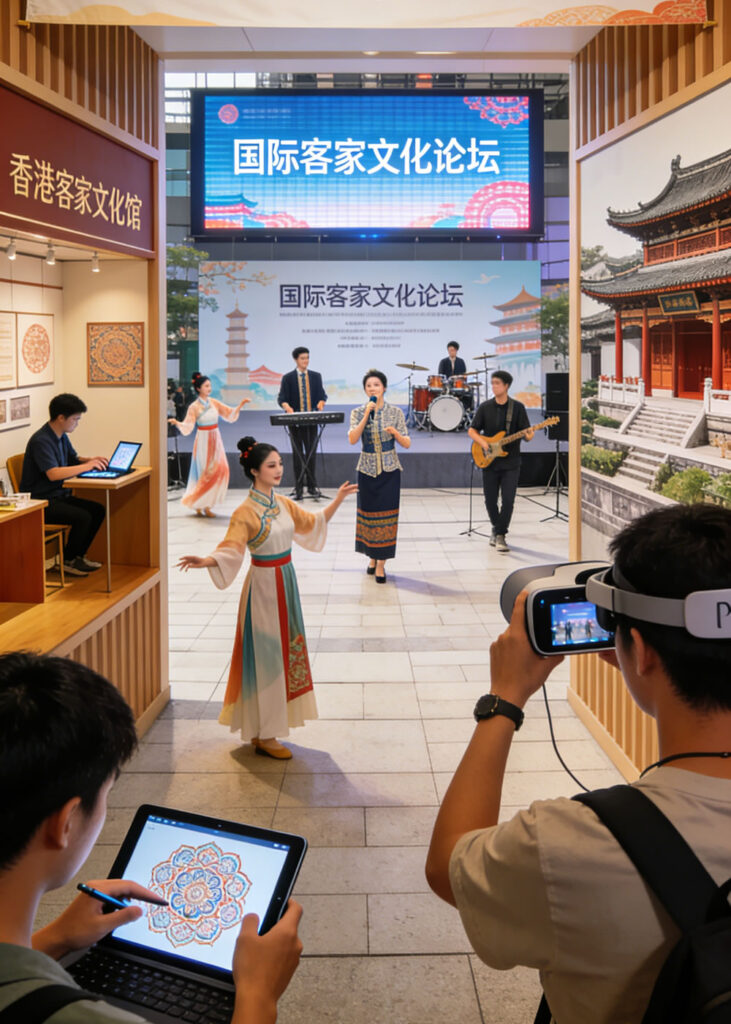
🌱 Hakka Culture in the Modern Era
Today’s Hakka communities are active, creative, and globally connected.
Modern Hakka culture includes:
- Revitalized language learning
- Contemporary Hakka music and arts
- Digital storytelling and online communities
- Cultural festivals and heritage events
- Cross‑regional collaboration and exchange
These developments show how Hakka identity continues to thrive in a changing world.
🗣️ Preserving and Revitalizing the Hakka Language
Many young Hakka people are rediscovering their language through:
- Community classes
- Online videos and podcasts
- Music and performance
- Family storytelling
- Cultural organizations and associations
In Guangxi, local variations of Hakka continue to evolve, influenced by Cantonese, Zhuang, and other regional languages — creating a living, dynamic linguistic landscape.
🎶 Modern Hakka Arts and Music
Hakka creativity is flourishing in new forms:
- Contemporary Hakka pop and folk music
- Modern interpretations of mountain songs
- Theatre and cultural performances
- Visual arts inspired by Hakka heritage
- Youth‑led cultural projects
These expressions help younger generations connect with their roots in fresh and meaningful ways.
🌏 Global Hakka Communities
Hakka people today live across:
- Mainland China
- Hong Kong and Macau
- Taiwan
- Southeast Asia
- Europe
- North America
- The Caribbean
This global presence has created a rich network of cultural exchange, where traditions, stories, and innovations are shared across borders.
🤝 Cultural Exchange and Collaboration
Modern Hakka communities actively participate in cultural exchange through:
- Cross‑regional festivals
- Academic conferences
- Heritage preservation projects
- Youth exchange programs
- Online cultural platforms
- Partnerships between Guangxi, Hong Kong, and overseas Hakka groups
These exchanges strengthen identity, build friendships, and create new opportunities for cultural growth.
🏡 The Role of Guangxi in Modern Hakka Culture
Guangxi continues to be an important center for Hakka cultural development.
Local communities contribute through:
- Mountain‑song festivals
- Cultural tourism projects
- Village revitalization
- Traditional crafts and cuisine
- Community associations and heritage groups
Guangxi’s diverse ethnic environment also encourages cultural blending and mutual learning.
🌐 Technology and the Future of Hakka Culture
Digital tools are transforming how Hakka culture is shared:
- Online archives and knowledge databases
- Social media communities
- Digital storytelling and short videos
- Virtual events and livestreams
- AI‑assisted language learning
These innovations help preserve traditions while making them accessible to younger generations worldwide.
🌿 Why Modern Hakka Culture Matters
Understanding modern Hakka culture helps us see:
- How traditions adapt to new environments
- How communities stay connected across distance
- How heritage can inspire creativity and innovation
- How cultural identity remains strong in a globalized world
Hakka culture is not fading — it is evolving.
📚 Learn More
This page is an introduction.
As our knowledge database grows, we will continue adding:
- Stories of modern Hakka creators
- Interviews with Guangxi and Hong Kong Hakka youth
- Examples of cross‑regional cultural projects
- Digital archives of music, language, and traditions
- Research on global Hakka communities
Stay tuned as we expand this resource for everyone who loves Guangxi and Hakka culture.