

 Welcome to GXHK.ORG — We all love Hakka culture!
🌏Geography and Ethnic Groups of Guangxi and the Hakka People
A simple introduction to Guangxi’s landscape, its diverse peoples, and the place of the Hakka community within it.
Guangxi is one of China’s most culturally rich and geographically unique regions. Its mountains, rivers, and ethnic diversity have shaped the lives, traditions, and identities of the people who live here — including the Hakka.
This page offers a clear and friendly overview of Guangxi’s geography, its major ethnic groups, and how the Hakka community fits into this vibrant cultural landscape.
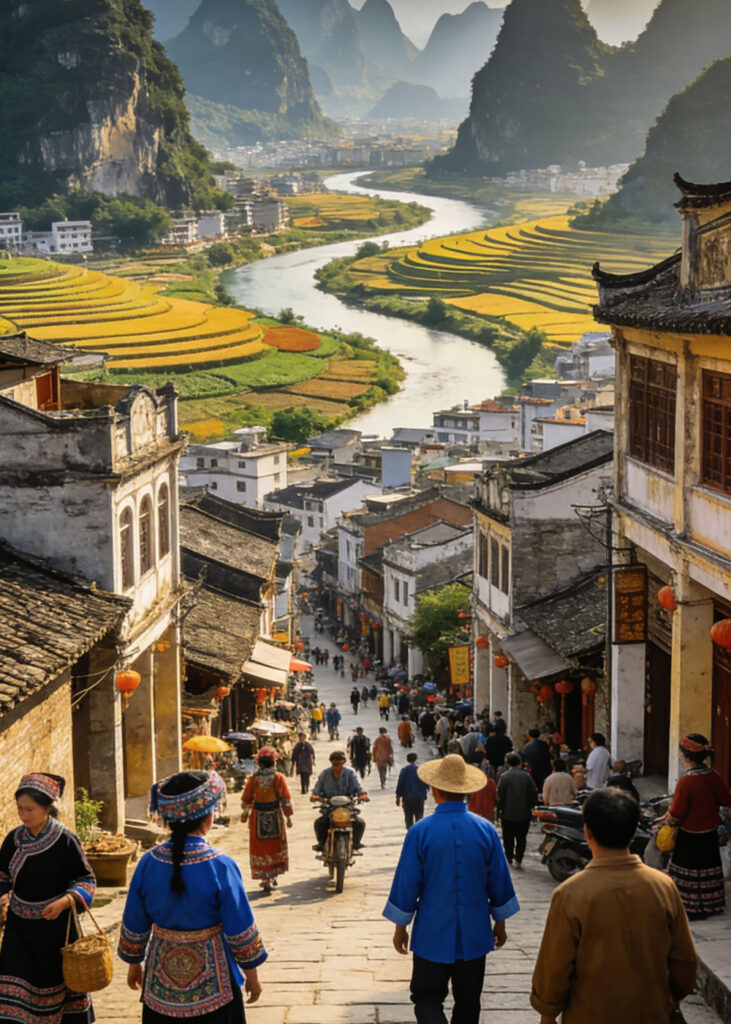
🏞️ The Geography of Guangxi
Guangxi Zhuang Autonomous Region is located in southern China, bordering Guangdong, Guizhou, Yunnan, and Vietnam.
Its landscape is famous for:
- Karst mountains (especially in Guilin and Hechi)
- Rivers and waterways (such as the Xijiang and Liujiang)
- Fertile plains in the southeast
- Mountain basins and valleys ideal for settlement
This diverse terrain has influenced migration patterns, agriculture, and cultural development for centuries.
🌈 A Region of Many Ethnic Groups
Guangxi is one of China’s most ethnically diverse regions.
The major ethnic groups include:
- Zhuang (壯族) — the largest minority group in China
- Han (漢族) — including Cantonese, Hakka, and other subgroups
- Yao (瑤族)
- Miao (苗族)
- Dong (侗族)
- Maonan (毛南族)
- Mulam (仫佬族)
Each group has its own language, traditions, festivals, and cultural heritage.
This diversity makes Guangxi a unique cultural crossroads.
🧭 Where Do the Hakka Fit Into Guangxi?
The Hakka are one of the important Han subgroups in Guangxi.
Although not the largest group, they have a long history in the region and have contributed significantly to local culture, agriculture, education, and community life.
Hakka communities in Guangxi are mainly found in:
- Guigang
- Hezhou
- Yulin
- Wuzhou
- Guilin
- Hechi
Most Hakka families arrived during the Ming and Qing dynasties, settling in mountain basins and river valleys that reminded them of their earlier homes in Guangdong and Fujian.
🧩 Why Guangxi Became a Home for the Hakka
Several factors made Guangxi a natural destination for Hakka migrants:
- Available farmland in the southeast
- Trade routes connecting Guangdong and the Pearl River system
- Mountain terrain similar to traditional Hakka regions
- Opportunities for new settlements during Ming–Qing population growth
These conditions allowed Hakka families to build villages, clans, and cultural communities that continue to thrive today.
🎎 Cultural Interactions in Guangxi
Because Guangxi is so diverse, the Hakka community has long interacted with other ethnic groups.
This has led to:
- Shared festivals and customs
- Blended food traditions
- Local variations of the Hakka dialect
- Cooperative village networks
- A unique “Guangxi‑Hakka” identity
These interactions show how culture evolves through contact, exchange, and everyday life.
🌿 The Hakka Contribution to Guangxi
Over the centuries, Hakka people in Guangxi have contributed to:
- Agriculture (especially rice, sugarcane, and fruit cultivation)
- Education and scholarship
- Folk music and mountain songs
- Community organization and clan culture
- Local trade and craftsmanship
Their resilience and adaptability have made them an integral part of Guangxi’s cultural mosaic.
📚 Learn More
This page is an introduction.
As our knowledge database grows, we will continue adding:
- Maps of Hakka settlements
- Profiles of Guangxi’s ethnic groups
- Stories from local Hakka communities
- Cultural comparisons and historical insights
Stay tuned as we expand this resource for everyone who loves Guangxi and Hakka culture.