

 Welcome to GXHK.ORG — We all love Hakka culture!
🏡 Traditional Architecture and Ways of Life
A simple introduction to Hakka homes, village life, and everyday traditions.
Traditional Hakka architecture and ways of life reflect centuries of migration, adaptation, and community spirit.
From the design of their homes to the rhythms of daily living, these traditions show how the Hakka people built strong, resilient communities across southern China — including Guangxi.
This page offers a clear and friendly overview of Hakka architecture, village structure, and the values that shaped their way of life.
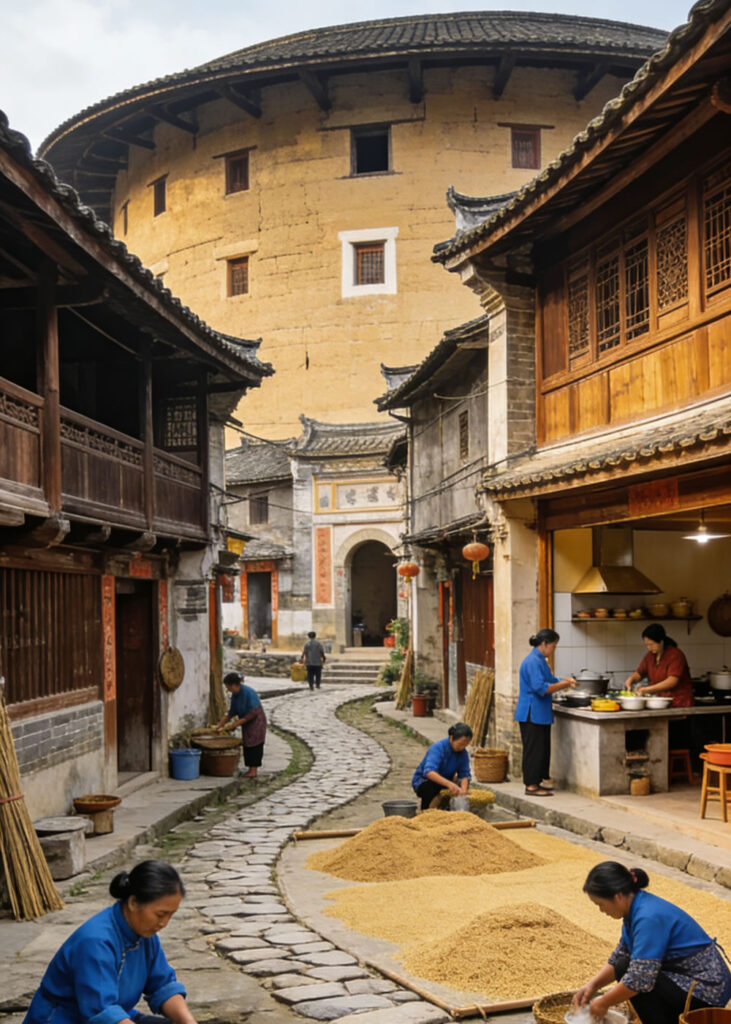
🧱 What Makes Hakka Architecture Unique?
Hakka homes were designed for:
- Safety
- Community living
- Efficient use of land
- Harmony with the environment
Because Hakka people often settled in mountainous areas, their buildings reflect a need for protection, practicality, and togetherness.
🏯 Common Types of Hakka Traditional Architecture
While the famous Fujian tulou are well‑known, Hakka architecture varies across regions.
In Guangxi and nearby provinces, common forms include:
- 1. 圍龍屋 (Wailong House / Encircling Dragon House)
- Semi‑circular layout
- Central ancestral hall
- Symbolizes unity and protection
- 2. 四合院式客家大屋 (Hakka Courtyard Houses)
- Square or rectangular layout
- Multiple generations under one roof
- Strong emphasis on family structure
- 3. 山區夯土屋 (Rammed‑Earth Houses)
- Built with local earth and timber
- Thick walls for insulation
- Practical and durable
- 4. 梯田村落 (Terraced Mountain Villages)
- Houses built along slopes
- Integrated with farmland
- Reflects harmony with nature
These architectural styles show how the Hakka adapted to different landscapes while preserving their cultural identity.
🏘️ Village Layout and Community Life
Traditional Hakka villages were carefully planned to support:
- Clan unity
- Agricultural cooperation
- Defense against bandits or conflict
- Efficient use of land and water
Common features include: - Ancestral halls
- Clan temples
- Wells and ponds
- Communal courtyards
- Terraced fields
The village was not just a place to live — it was a living network of family, culture, and shared responsibility.
🌾 Traditional Hakka Ways of Life
Hakka daily life was shaped by the land and by centuries of migration.
Key characteristics include:
- Agriculture as the Foundation
Rice, sweet potatoes, vegetables, and fruit were central to survival.
Terraced farming and irrigation systems were common. - Strong Family and Clan Bonds
Multiple generations lived together.
Ancestral worship played a central role in community life. - Simplicity and Practicality
Hakka culture values thrift, durability, and resourcefulness.
Homes, tools, and clothing were designed to last. - Education and Self‑Improvement
Even in remote areas, Hakka families emphasized reading, writing, and moral education. - Festivals and Folk Traditions
Mountain songs, lantern festivals, and ancestral rituals kept the community connected.
🌿 Hakka Architecture and Life in Guangxi
In Guangxi, Hakka communities adapted their homes and lifestyles to local geography:
- Mountain villages in Hezhou and Hechi
- River‑valley settlements in Guigang and Wuzhou
- Mixed‑ethnic villages where Hakka lived alongside Zhuang, Cantonese, and Yao communities
This created a unique Guangxi‑Hakka style, blending traditional Hakka features with local materials and customs.
🧭 Why These Traditions Matter Today
Traditional architecture and ways of life help us understand:
- How the Hakka survived and thrived through migration
- How communities stayed united across generations
- How culture adapts to geography and environment
- Why Hakka identity remains strong today
These traditions are not just history — they are living heritage.
📚 Learn More
This page is an introduction.
As our knowledge database grows, we will continue adding:
- Photo galleries of Hakka houses
- Stories from Guangxi Hakka villages
- Architectural diagrams and explanations
- Interviews with elders and craftsmen
- Comparisons of Hakka homes across regions
Stay tuned as we expand this resource for everyone who loves Guangxi and Hakka culture.